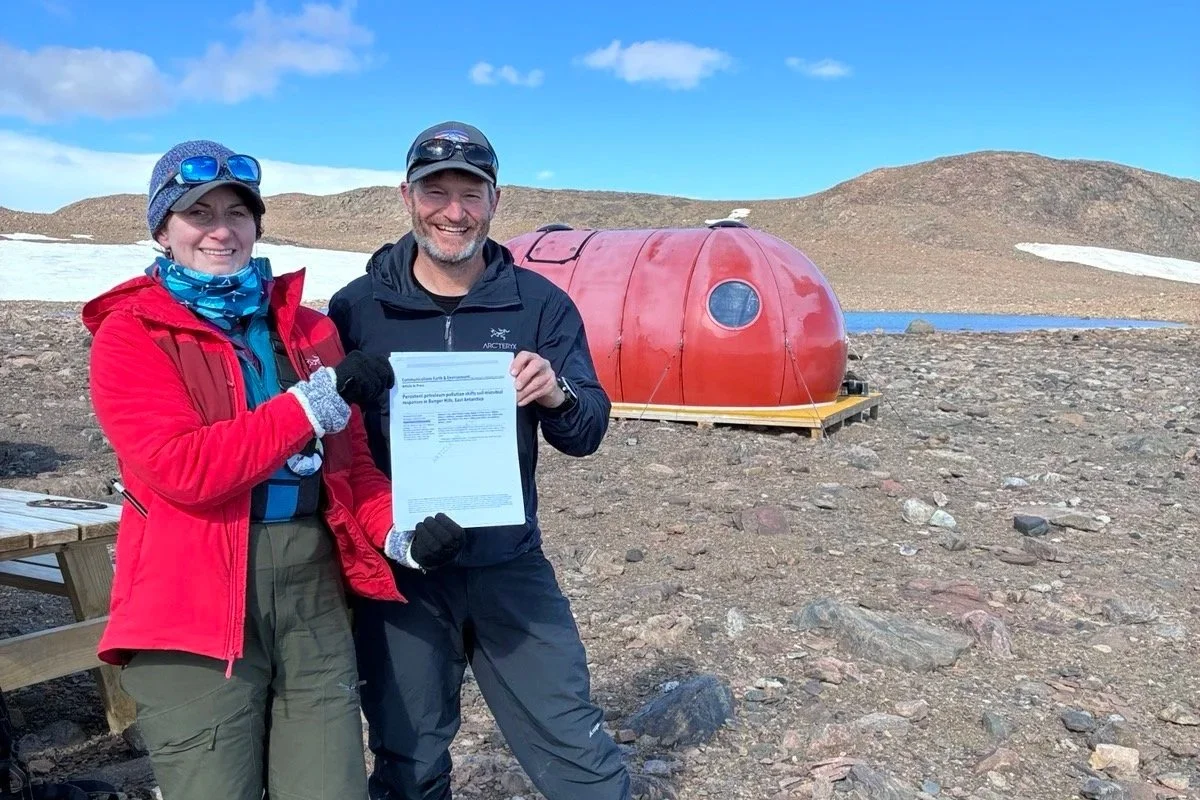
A lovely coincidence unfolded yesterday at our study site: two of our co‑authors happened to be there with a freshly printed copy of our new paper in hand. The smiles on Rebecca McWatters and Tim Spedding’s faces say it all.
Beautifully led by Kellynn Tan, this study explores the soil microbial communities of Bunger Hills, East Antarctica, and how they have responded to a 40‑year‑old legacy petroleum spill. Using metagenomics and gas chromatography, we uncovered striking shifts in microbial composition and functional potential in the contaminated soils.
These soils showed reduced hydrogen oxidation and surprisingly higher ¹⁴CO₂ carbon fixation rates, hinting at complex metabolic adjustments to long‑term pollution.
From our datasets, we assembled 300 metagenome‑assembled genomes spanning 16 bacterial and archaeal phyla, including 25 novel candidate species - an exciting contribution to Antarctic microbial diversity.
Overall, our findings highlight the long‑lasting ecological consequences of hydrocarbon contamination in polar environments. While uncontaminated soils selected for autotrophic taxa reliant on inorganic carbon, elevated carbon fixation rates in contaminated soils were associated with energy-intensive degradation processes.
Our study establishes a valuable baseline for monitoring the impact of contamination on Antarctic soil ecosystems.
A proud moment for the whole team!
Read it full at: https://www.nature.com/articles/s43247-026-03299-0